Repair or replace: furnace and central air
There is no single age at which a system must go. The decision rests on what failed, what else is likely to fail soon, and what a new system would change.
Signals on each side
Leaning toward repair
- A single failed part on a system that otherwise runs evenly
- No refrigerant leak, or a leak that is found and sealed
- A furnace heat exchanger in sound condition
- Comfort that was good until the fault appeared
Leaning toward replacement
- A cracked heat exchanger or a failed compressor
- Repeated refrigerant top-ups year after year
- Rooms that never heated or cooled evenly
- A furnace and AC both near the end, sharing one blower
Refrigerant and older air conditioners
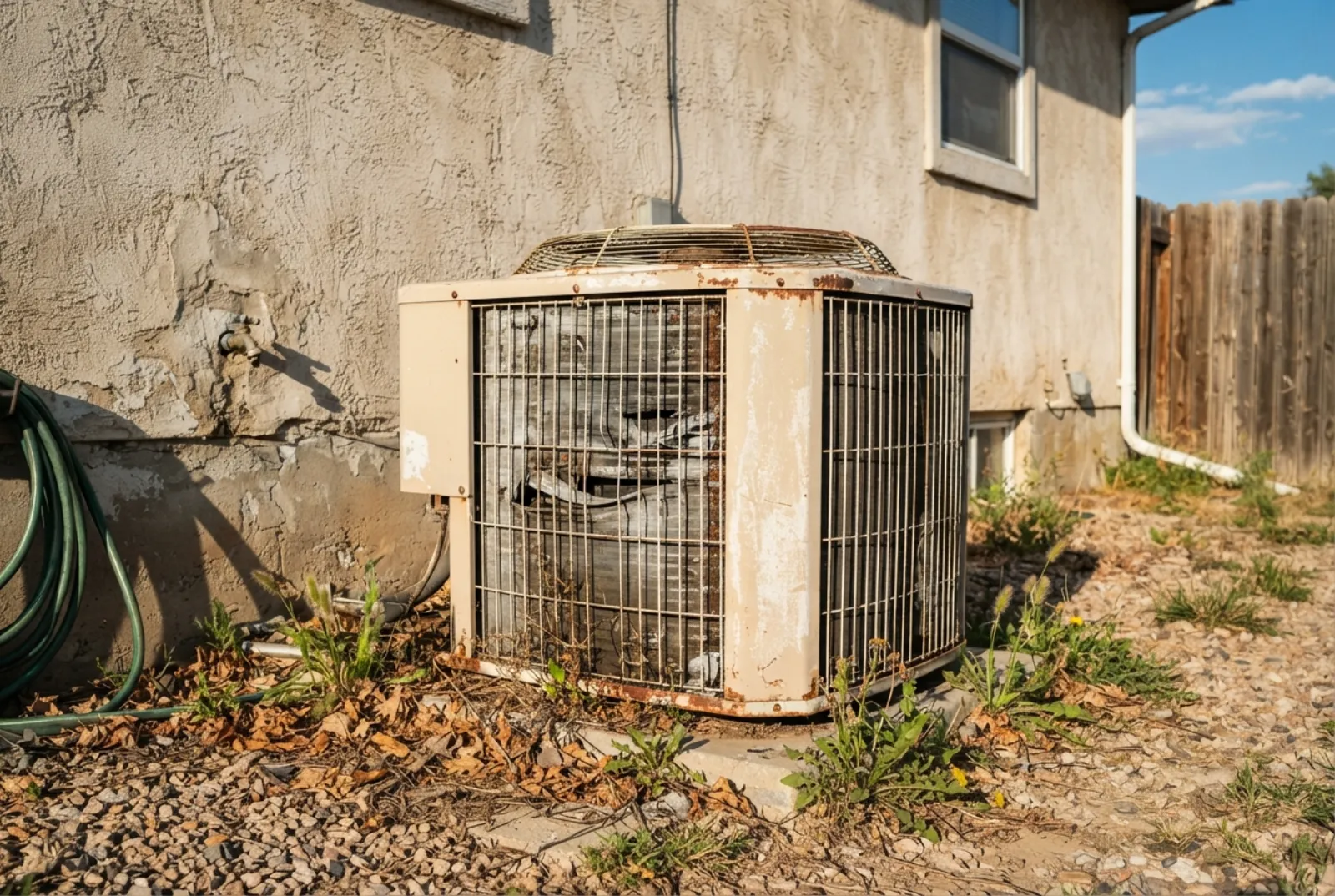
An older air conditioner can keep running and be repaired. EPA guidance says existing systems may be serviced throughout their useful life and that parts for repairing them may still be made and sold (EPA Technology Transitions fact sheet).
The cost of the refrigerant and the size of the leak are what tip it. A small leak in a young system is a repair. A large leak in an old system with a tired compressor rarely is.
Replacing one half of a split system
The outdoor condenser, indoor coil and furnace blower work as a matched set. Replacing only the condenser on an old coil can cost efficiency and shorten the new unit's life. If one side is new and the other is not, ask how the contractor plans to match them.
Rebates can tilt the math
A furnace replacement may qualify for Xcel's rebate if it reaches 95% efficiency and replaces a non-condensing unit (Xcel heating equipment rebates). An air conditioner replacement on its own no longer earns an Xcel cooling rebate (Xcel cooling rebates), but a ducted heat pump in its place can (Xcel 60-day notice).
Questions that settle it
- What failed, and what is the condition of the parts that did not?
- If repaired, which part is likely to go next?
- Is the system the right size for the house today?
- Would replacing the furnace and AC together save rework later?
- Which rebates apply to each option, and who files them?
Hot upstairs, cold downstairs, or no air at all?
Tell the contractor what the system is doing and how old it is. They decide with you whether a visit, a repair or a new system makes sense.