Seasonal tune-ups for furnace and AC
Two short visits a year, one before the heat and one before the cold, catch most of the small faults that turn into breakdowns on the worst day.
Spring and autumn checklists
Cooling check, late spring
- Clean the condenser coil and straighten bent fins
- Measure refrigerant pressures and temperatures
- Test the capacitor and contactor
- Clear the condensate drain and trap
- Check the indoor coil for dust and the blower for balance
Heating check, early autumn
- Inspect burners, igniter and flame sensor
- Look over the heat exchanger for cracks or rust
- Confirm the venting is sound and draining
- Test safety switches and the limit control
- Measure temperature rise across the furnace
Why timing matters on the Front Range
Fort Collins can jump from mild to hot in days. In 2025 the station set a record 98°F on 20 June (Colorado Climate Center, June 2025). A cooling check in May means a weak capacitor is found before that first spell rather than during it.
Autumn works the same way. The first cold night is when many furnaces run hard for the first time in months, and dust burned off the burners or a dirty flame sensor shows up then.
What you can do between visits
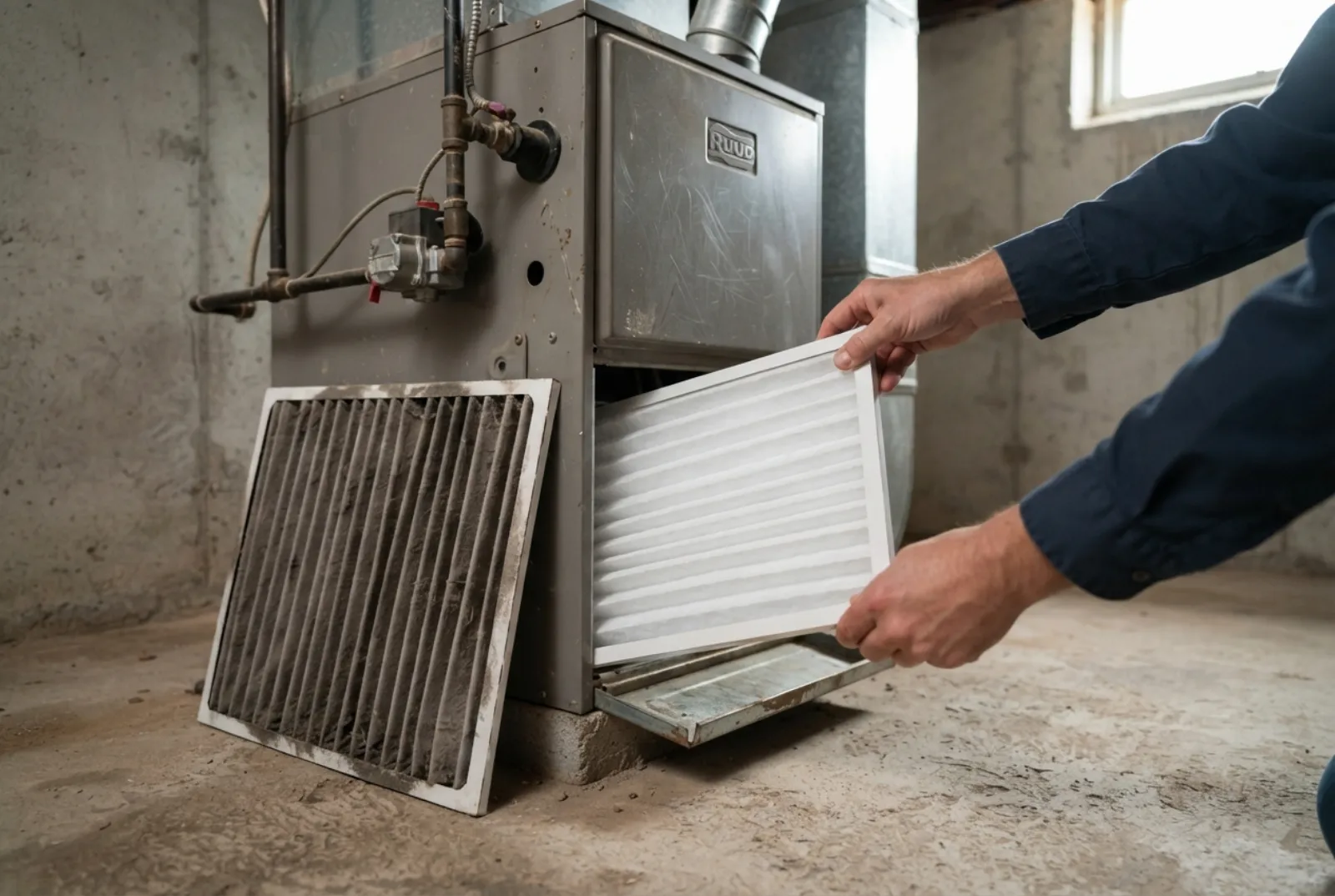
- Change the filter on the schedule printed on it, sooner during wildfire smoke or construction dust.
- Keep two feet of clear space around the outdoor unit.
- Clear snow away from furnace intake and exhaust pipes on side walls after storms.
- Pour a cup of water into the condensate trap in spring to see that it drains.
- Test smoke and carbon monoxide alarms at least monthly.
Rebate programs sometimes look at maintenance records. Efficiency Works tests heat pump installs against its own performance specifications before paying a rebate (Efficiency Works FAQ), so a well-kept system starts from a better place.
Hot upstairs, cold downstairs, or no air at all?
Tell the contractor what the system is doing and how old it is. They decide with you whether a visit, a repair or a new system makes sense.